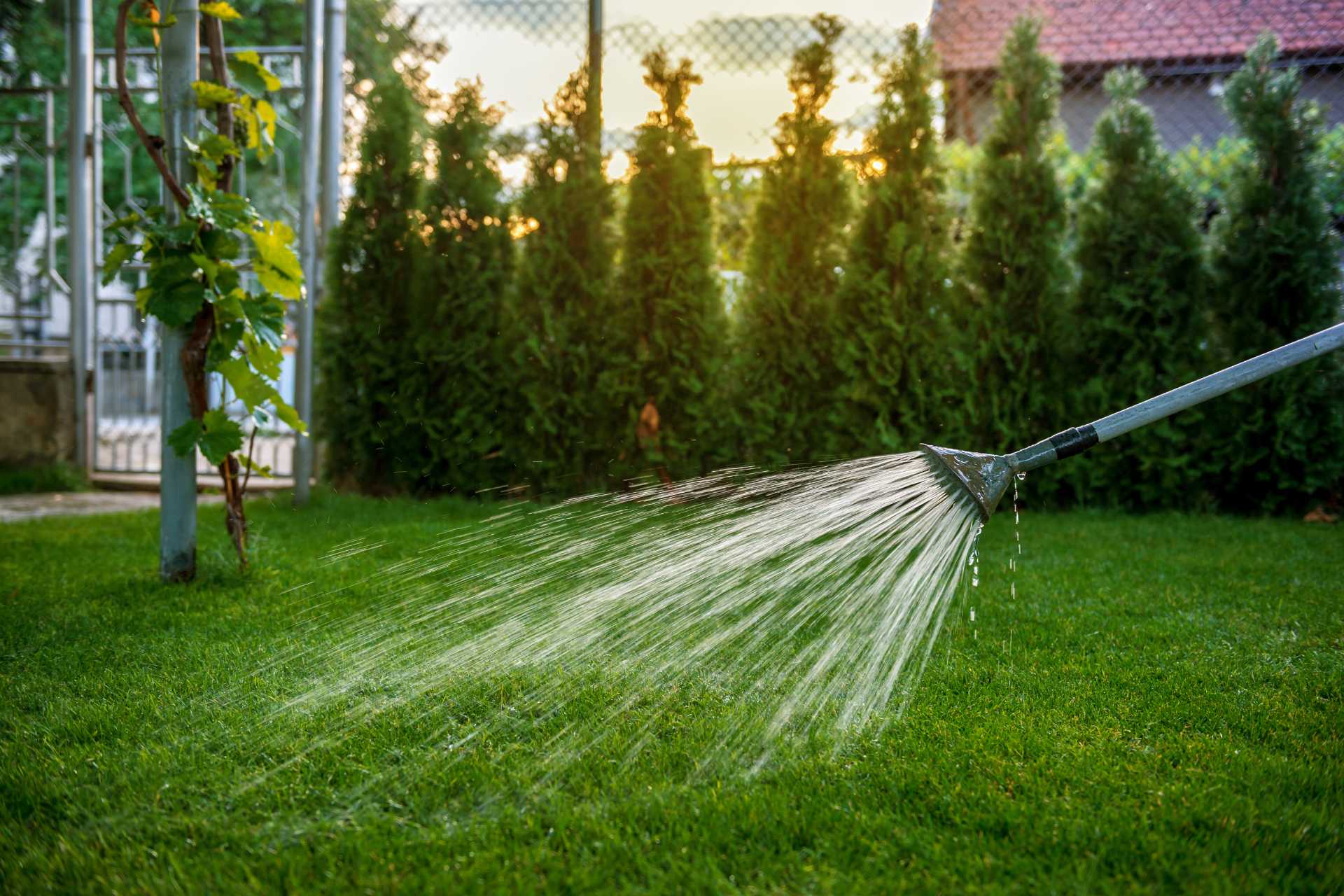
The dream for every homeowner is a thick, lush, velvety green lawn. It is the architectural anchor that provides spectacular curb appeal and defines the estate’s visual aesthetic. Yet, a crucial truth often goes unspoken in the green industry: far more lawns are accidentally killed by over-enthusiastic care than by even the most severe summer droughts. Well-intentioned watering—born from the belief that more is always better—is often executed with blunt, imprecise tools that slowly suffocate the very grass you are trying to nurture. Understanding the science of soil moisture is essential for every property owner. Recognizing the hidden botanical signs of overwatering is the first critical step. Upgrading to a professionally designed irrigation system is the ultimate solution to protect your property’s root health and the delicate soil ecosystem from toxic over-saturation.
Home maintenance requires balancing various structural systems simultaneously. While we proactively schedule inspections for high-traffic items like our garage doors or HVAC systems, the ground beneath our feet frequently gets ignored, only receiving reactive, imprecise attention during intense heatwaves. True lawn longevity relies on a continuous, proactive calibration that manual watering can never achieve. Shifting from the guesswork of a garden hose to a comprehensive management plan is a fundamental investment in your property’s enduring strength and visual harmony.
What You’ll Learn from This Blog:
- The Root of the Problem: How continuous soil saturation starves your grass of necessary oxygen.
- The 4 Silent Warning Signs: How to spot a “drowning” yard through spongy turf, deceptive yellowing, fungal growth, and weed infestations.
- The Manual Deficit: Why traditional hoses and hardware-store oscillating sprinklers destroy your lawn’s health.
- The Precision Solution: How automated zoning, weather tracking, and advanced tech eliminate overwatering to build resilient roots.
The Biology of Suffocation: How Too Much Water Kills Grass
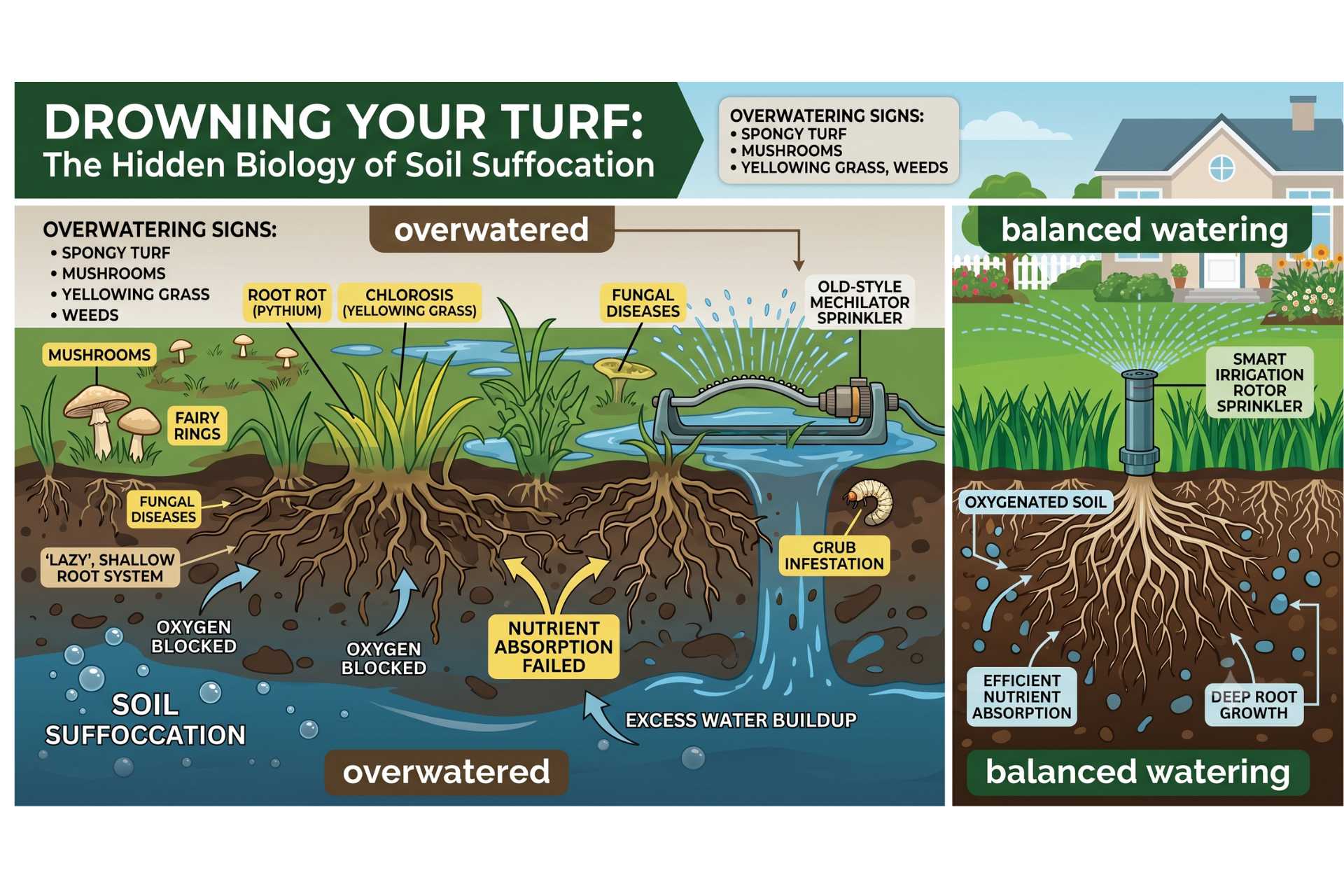
When you overwater a lawn, you are not just making it wet. You are fundamentally changing the chemistry of the soil structure. Like all plants, grass roots need oxygen just as much as they need moisture. In a healthy soil ecosystem, tiny air pockets exist between soil particles. These are often called ‘pore spaces.’ A proper watering cycle fills these spaces with moisture. The water then drains away, allowing fresh oxygen to re-enter. This process lets the root system breathe.
Continuous, excessive saturation removes the oxygen entirely. Without regular aeration cycles, the soil enters an anaerobic state. This means it is completely devoid of oxygen, which effectively drowns the root system. This environmental stress forces the grass into a ‘lazy’ state. Moisture is always present right at the surface. Because of this, the roots have no structural incentive to push deep into the earth to find water. The turf develops a shallow, weak root system. It cannot survive minor temperature spikes, leaving it entirely defenceless against even a brief summer heatwave.
4 Hidden Signs Your Lawn is Secretly Drowning
Recognizing a drowning lawn requires looking past the surface green. Here are four primary biological warning signs that you are applying too much water to your turf.
1. The Spongy Footprint
Walking across your lawn should not feel like traversing a muddy bog. If you can still feel the grass compress under your weight, like a waterlogged sponge, hours after you have finished watering, the ground is completely oversaturated. When soil remains permanently soggy, it loses its ability to bounce back, crushing the soil pore structure and accelerating root suffocation.
2. The Yellowing Deception (Chlorosis)
This is the most dangerous overwatering symptom because it triggers the wrong human response. When drowning grass turns pale yellow, a condition known as chlorosis, most homeowners panic. They assume their turf is parched for moisture, prompting them to add more water. In reality, the yellowing is a distress signal that the roots are no longer able to absorb iron, nitrogen, and other crucial nutrients from the oxygen-starved soil. Adding more water only suffocates them further.
3. Fungal Invasions & Rotten Roots
A permanently damp lawn is the perfect incubation environment for destructive fungal pathogens. If you notice persistent fungal patches, mushrooms, or ‘fairy rings’ suddenly sprouting across your turf, your watering schedule is too aggressive. Beneath the soil, this excessive moisture causes your healthy white grass roots to turn brown, slimy, and rotten (known as Pythium root rot), emitting a distinct, foul, anaerobic odour.
4. Weed and Pest Takeovers
Lawn pests like grubs and moisture-loving weeds thrive in oxygen-poor, saturated soils. If your once-thick lawn is being rapidly overtaken by invasive species such as nutsedge, crabgrass, or watergrass, they are telling you that your environmental balance is off. Grubs also actively seek out these soggy zones, where they feed on the weakened, shallow root systems, further compromising the integrity of your entire property.
The Manual Watering Trap: Why Hoses and Oscillators Fail
Most homeowners default to manual methods, like moving oscillating sprinklers or dragging a garden hose from one spot to the next. These approaches fail because they operate purely on human guesswork. It is almost impossible to manually quantify how much water your soil has actually absorbed across an entire acre. You create localized ‘swamps’ with extreme puddling while leaving other critical ‘hot spots’ parched for moisture, leading to a patchwork appearance of dead grass and muddy zones.
Manual systems offer zero protection against nature. They cannot automatically shut down when it rains, and wind drift easily disrupts their imprecise spray patterns. Worst of all, they rely on you remembering to manually turn off the faucet. Forgetting to do so for just one hour can dump hundreds of gallons of excess water into your soil, instantly reversing months of careful turf management and inflating your monthly utility spending.
The Automated Solution: How Modern Systems Stop Overwatering
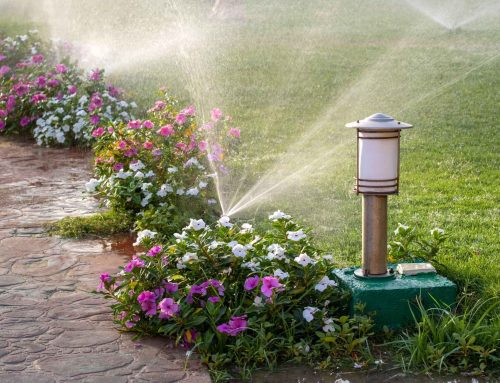
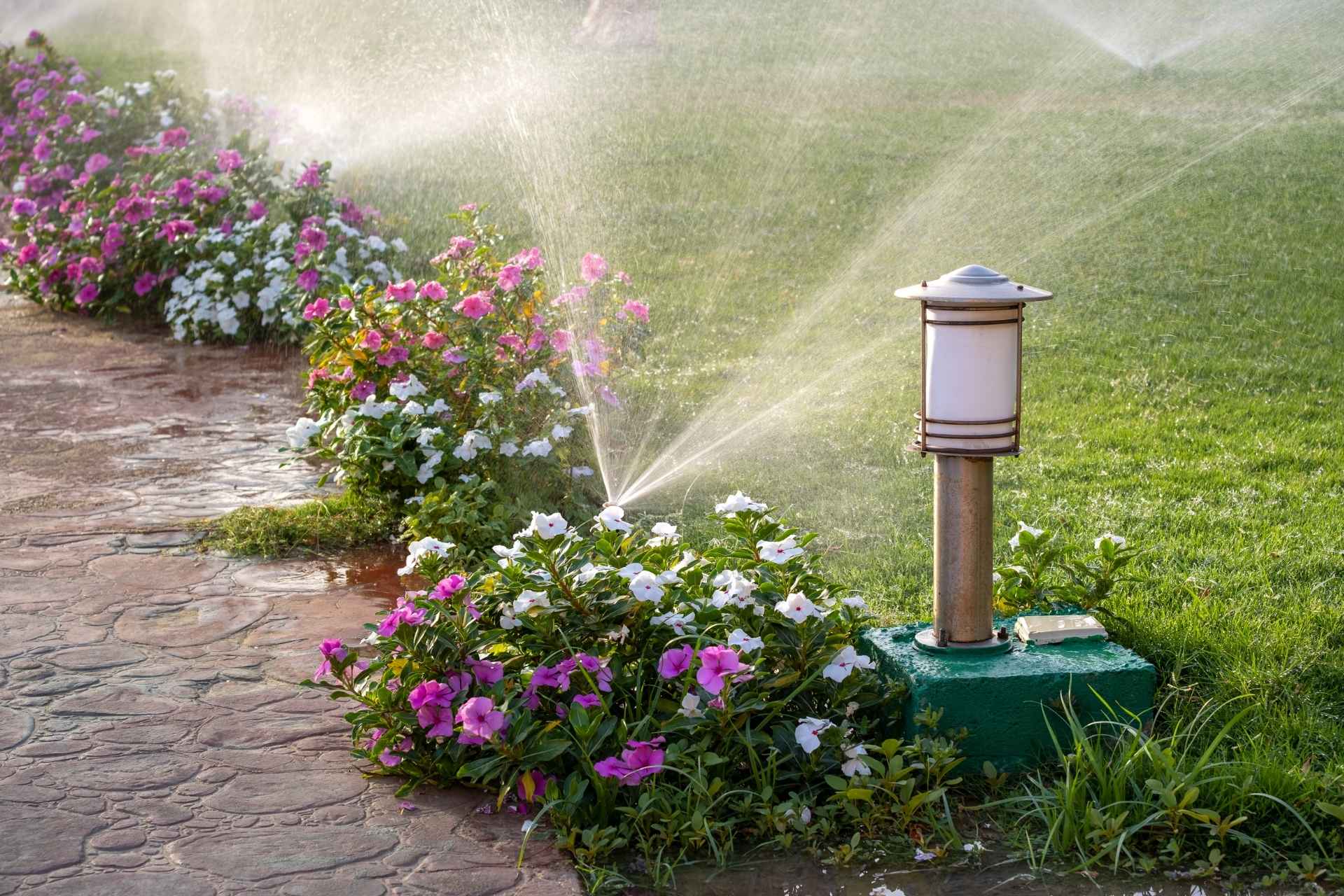
Switching to a professionally engineered automated irrigation system replaces the imprecision of human guesswork with scientific moisture control. Modern configurations are designed around resource conservation and precise plant needs. By using specialized components, like 2026 rain-delay sensors and soil moisture probes, these setups completely shut down watering cycles during and after natural rain events, eliminating wasteful redundancy entirely.
An expertly designed system divides your property into distinct hydrozones. A technician will carefully calculate the number of zones your lawn needs based on complex variables such as specific soil types (clay vs. sandy), local sun exposure patterns, microclimates, and varying plant types. For instance, a shady zone featuring delicate ornamental grasses might require high-efficiency drip irrigation, while a wide-open, full-sun turf area requires high-volume rotors. Furthermore, this system uses precise evapotranspiration (ET) data to calculate local weather variables—including air temperature, humidity, and solar radiation—to determine the exact amount of water your specific soil has lost each day. This ensures that the grass never drops below a healthy hydration threshold while guaranteeing that a single extra drop is never wasted.
From Soggy Soil to Smart Savings: Precision Care for a Thriving Property
Overwatering is an aggressive, destructive habit that stems from good intentions but is executed with imprecise, archaic tools. Taking care of your lawn should never mean drowning it. Manual watering creates messy hotspots and structural subsoil failures that undermine your property’s foundation and enduring value. Switching to a customized automated system is an essential investment that protects your property, streamlines your weekends, and ensures a vibrant, ecologically healthy environment. Investing in a smart irrigation system can significantly reduce your water bill because you are no longer guessing.
The precision science of soil moisture ensures you apply the exact amount needed, and not a drop more, making conservation a seamless part of your home’s infrastructure. To build a truly resilient landscape and keep your grass green during the summer, you must stop drowning your roots and start engineering deep structural vitality with a professional irrigation solution.